When I think about my father, Munir Zaabri, in Saudi Arabia, I think of two building materials, lumber and marble. Our family remembers him bringing both from Romania to Saudi builders. His résumé fills in the business behind that memory. It names the companies he ran, two Romanian firms he worked with and the prince he worked with at the King Faisal Foundation in Riyadh.
The road to Riyadh
Dad learned to sell across borders long before he worked in construction supply. A biography our family prepared in 2012 traces him to Kuwait, Bahrain and the United Arab Emirates in the early 1970s, representing IBM. At Universal Trading Group, his responsibilities grew to hiring staff and establishing new divisions. By the 1990s he was in Riyadh, where he established Haden Holding to represent North American companies.
In the business portfolio our family circulated in 2011, Dad’s partner in Gulf Base Trading Company is named as Prince Bandar bin Saud. Dad’s own résumé from that summer puts two jobs on the map. He was managing director of Haden Holding in Riyadh and managing director of Gulf Base Trading in Dubai. Our family biography dates the Gulf Base partnership to 1993. It credits Dad with bringing Romanian companies into the region.
The Romanian end of the trade
Two names in Dad’s biography make that history easier to trace today. It credits him with introducing InterAgro and Petrotub to the region. Petrotub operated a mill in Roman, a city in eastern Romania. A European Commission decision describes its work in unusually concrete terms. Before its privatization in 2003, the mill made seamless steel tubes ranging from 6 to 620 millimeters in diameter.
The U.S. Foreign Agricultural Service’s lumber export tables list Saudi Arabia as a destination for Romanian softwood and temperate hardwood lumber in both 1999 and 2000. Romania and Saudi Arabia established diplomatic relations in 1995. In a 2004 interview with Romania’s ambassador in Riyadh, Arab News listed timber and furniture among Romanian exports to the kingdom. The newspaper put total trade between the countries at $95 million in 2002. That figure covers both countries’ trade. What I can speak to as his son is the part our family remembers him doing, including bringing in marble as well as lumber.
What our family records say about the foundation
In his July 2011 résumé, Dad names Prince Bandar bin Saud bin Khalid as someone he worked with on the development of the King Faisal Foundation in Riyadh. He also lists the Al Faisaliah development among his projects. There is a public record on the Saudi side. The Getty Research Institute’s catalog of architect Philip Johnson’s papers lists 1993–94 correspondence about the Faisaliah Complex with Prince Bandar and other foundation members. Dad’s résumé is the source for his own involvement.
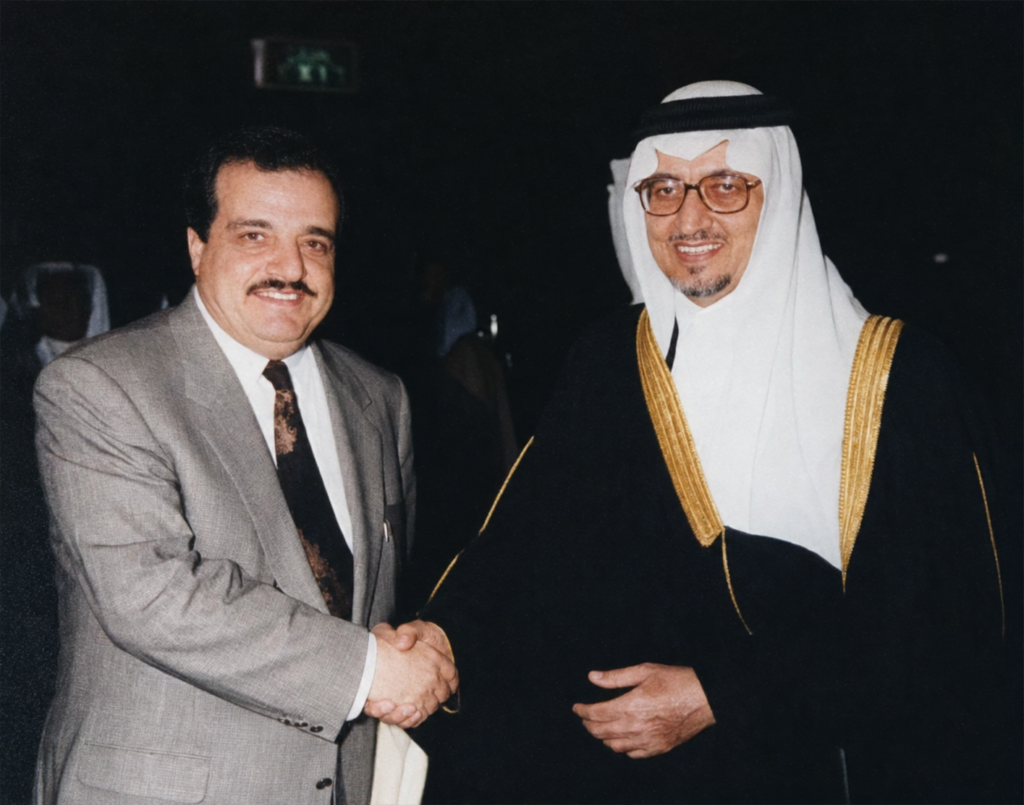
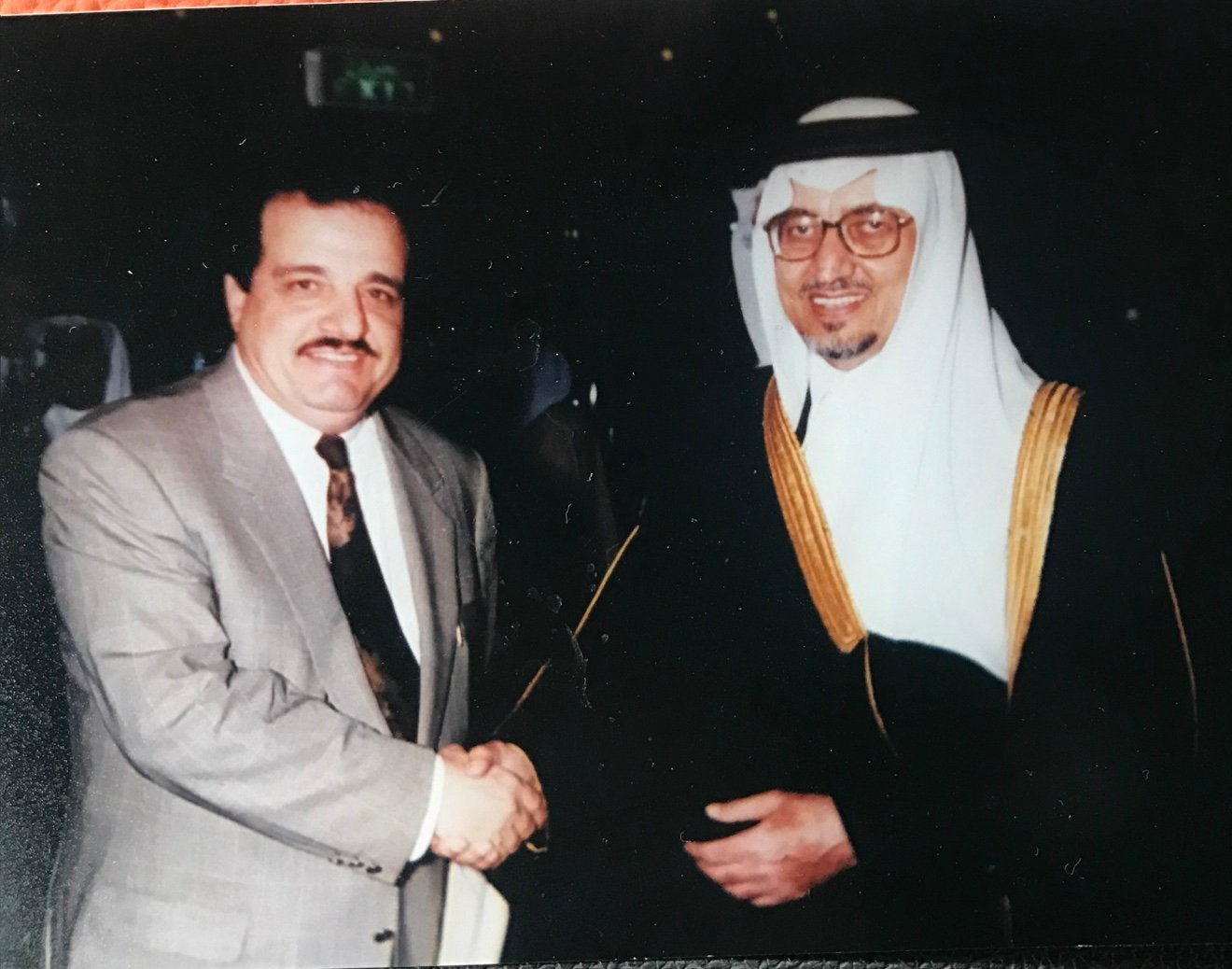
My family remembers Prince Khalid Al-Faisal as a friend and business associate of my father. The King Faisal Prize biography identifies him as King Faisal’s son. That made him a nephew of King Fahd, who reigned in 1993. Khalid was also one of the foundation’s founders. Our original handshake photograph carries no full name or date. What Dad did put on paper were the company names, the places he worked and the suppliers he introduced.
How a call with my uncle corrected a story I had told for years.